Why Circle Built Arc: The Vision and Key Features
Speakers
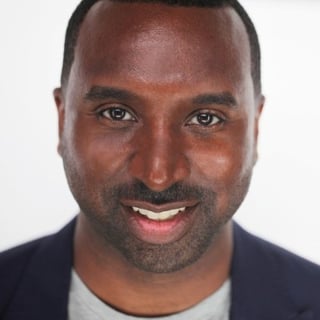
Corey Cooper is a technologist with experience spanning development, founding and scaling products, solutions engineering, and developer relations. He blends vision, creativity, and strong business acumen with deep technical expertise to drive go-lives, product launches, and high-impact developer experiences. Corey is known for his ability to navigate across roles, lead cross-functional initiatives, and deliver scalable, well-crafted solutions that support both product growth and customer success.


SUMMARY
Learn about the vision for Arc and its key features, straight from the Circle product team.
Circle team members Corey Cooper (Senior Manager, Developer Relations), Simon Lapscher (Principal Product Manager) and Sam Magnant (Senior Principal Product Manager) came together at the inaugural Arc Studio event in Buenos Aires to talk about the product vision for Arc.
Are you a builder? Be sure to: 👉 Browse our docs: https://docs.arc.network 👉 Get developer support: https://discord.com/invite/buildonarc 👉 Follow us on X: https://x.com/Arc 👉 Read our blog: https://www.arc.network/blog
Architects are independent Arc community participants and are not employees or agents of Circle Technology Services, LLC (“CTS”), any of its affiliates, or the Circle Arc team (collectively, “Circle”). Participation in the Architects program does not create any employment, agency, partnership, joint venture, fiduciary, or other formal relationship with Circle. Architects may not make statements on behalf of Circle, unless expressly authorized in writing to do so. Architects may not bind Circle in any respect. Certain roles or opportunities are subject to additional terms and prior approval. Arc testnet is offered by CTS. CTS is a software provider and does not provide regulated financial or advisory services. You are solely responsible for services you provide to users, including obtaining any necessary licenses or approvals and otherwise complying with applicable laws. Arc has not been reviewed or approved by the New York State Department of Financial Services. The product features described in these materials are for informational purposes only. All product features may be modified, delayed, or cancelled without prior notice, at any time and at the sole discretion of CTS. Nothing herein constitutes a commitment, warranty, guarantee or investment advice.
TRANSCRIPT
COREY: I'm Corey Cooper and I lead dev rel at Circle. My focus is to evangelize the products that, these two gentlemen here create. And, this is a special moment to be on stage with Wam, because when I joined Circle four years ago, I was learning about all the products and services do the work that he was doing internally in the company.
We're here because of Arc, and what we will want to do is we want everybody from this, this panel to walk away with a lot of insight on the thought and things that went behind building Arc. So I'm going to hand it off to, Sam so he can kind of give a background on, his self and what he works on at Circle, and then he'll, he'll pass it off to Simon as well to talk about what Sam is focused on. And then we'll jump into the conversation with talk about Arc.
SAM: So nice to meet everyone here. I hope everyone's having a lovely day. In this beautiful city. My name is Sam. I, I work at Circle. I've been at the company for about nine years, so I'm a very old piece of furniture. And I work on the product team. I'm focused on onchain effects right now. So we're building, we're building a set of ecosystem partnerships and also solutions on on Arc to facilitate onchain effects with stablecoins. I'm very excited about this this vision finally materializing. We've been talking about it for years, and I've spent the last year speaking with every stable issuer under the sun, and every every protocol under the sun, and really have the highest conviction that I've ever had that, 2026 is going to be a year where onchain effects is actually going to materialize. So, yeah, looking forward to meeting everyone and chatting to some awesome.
SIMON: Hey everyone, I'm Simón or Simon. I'm actually very new to the Circle, so I'm almost three months in, but I've been in crypto for 12 years. Mainly building self custodial and and interoperable software. And so that's why I'm, I'm doing that Circle. I'm basically, building interoperability tools for moving money across chains very seamlessly. And I'm also standing up the borrowing and lending, and core DeFi pieces of Arc.
COREY: So, Sam, you know, can you talk about the vision of Arc and why are we calling it an economic OS
SAM: Hot topic. Yeah, for sure. So, I mean, as long as I have as long as I've worked at Circle, we've been engaging with institutions and enterprises and and sharing the vision for this onchain finance world that we're, you know, we're trying to create, materialize. And there is just been a consistent pattern of feedback and requests when it comes to blockchain infrastructure in terms of features and functionality. So it's it's very clear set of things that we kept learning and kept hearing from the ecosystem. And then, and then once we, once we got to the, the clarity on, on stablecoins where, the original founding vision for the company was that internet money, like money is going to come on to the internet. And as we sit here today, ten years after the company has been founded, like we've we have realized that that part of the vision, the second part of the vision, is that is that blockchain infrastructure and smart contracts will drastically increase economic activity and economic participation in some of these practical forms of economic utility.
So payment, FX, lending credit, traditional capital markets activity. And we've seen like the we've seen the seeds of that today. And DeFi obviously. And we're starting to have we're at the very beginning of this payments evolution. But looking forward and we it's very, very clear that blockchains and smart contracts will be the accelerant to broad based economic participation.
And so Arc is really materialized. It's a kind of manifestation that, that vision
COREY: I guess, for, for Simon, you know, we've worked on a lot of different chains. There's like almost a new chain launching every day. So can you explain to the crowd, like, what Arc is uniquely positioned to do because of the rich primitives that comes with.
SIMON: Yeah. So I think that Arc is basically can act as, almost like a liquidity hub. So a lot of chains already, like, basically are fast finality. People are using it for parking their liquidity there and going into multiple chains. Right. And so I think because of the interoperability stack that Circle has built, which will be native on Arc, there's this position to actually be not one more chain, but the coordination, almost the coordination chain where everything stems from Arc, where you issue your asset on Arc and it's natively already operates on all of these different chains.
Because, you know, today we have, for example, CCTP, which is the cross-chain transfer protocol for USDC, but and today it only carries USDC, but very soon it will expand its payload to any asset that is issued on Arc, right. And so if we if we think about it that way, really what it is is where assets are born and held. And then because of its fast finality, because of its ease of use with us as it goes, because of the trusted infrastructure that Circle has built with the developer tools, we can then natively and easily transfer it to everywhere else, that that exists in the, in the onchain world. So it's not really I don't see Arc as another destination. I really see it as the coordination hub. Almost.
COREY: Nice. Nice. So I guess developers in the room, you know, take heed to this. Check out our docs. But, basically what he's saying is that in this, this, this multi-chain world and the programmability that you see onchain, you know, the genesis of a lot of transactions could originate, you know, on Arc and then go elsewhere because of the, the actual interops that we have.
I guess the next question, Sam, this is for you. I want to switch gears. You know, last week we made a big announcement, stable FX and, you. Yeah, stable FX and the, Circle sable partnerships. So, Sam, can you kind of talk about how those two announcements benefits Arc and, what you hope to see built?
SAM: Yeah, absolutely. So I guess I'll start by saying that, the FX market, the traditional forex market is massive. It's incredibly efficient and it's amazing. And, and it does trillions of dollars a day in transaction volume. And it is really, really, really powerful. But when money needs to move for forex, we're still reliant on the corresponding banking routes, which still move slow. There's still friction in there. In addition to that, forex relies on a very complicated network of multilateral and bilateral agreements. Credit intermediaries, central clearing counterparties, that are hard to access and create like an incredible amount of operational overhead. And so like these are these are very tangible problems that like stablecoins and crypto, really set out to solve a long time ago. And the question is like, why hasn't that happened yet? And, the answer to me is it really boils down to three things. It's, it's assets, it's institutional comfort. And then it's and then it's a beachhead. So on the asset side, we haven't had, the assets to make onchain FX work today. We've had, you know, the advent of U.S. dollar stablecoins is is relatively new. And we have high quality US dollar stablecoins with strong distribution. When you get into local markets, these markets are new institutional comfort. We haven't had institutional comfort today either, to actually drive demand into these pairs because there hasn't been regulatory clarity. Because there hasn't been like a tangible use case for stablecoins. It's changing. And then the final thing is like a beachhead. I think this is the most important part for like onchain FX. And we we often glaze over in the, in the crypto industry is like, what is the problem that onchain FX markets can actually solve today? And for me that is like that is very clear now, that is on off ramping. And it's moving between the traditional fiat into, into crypto.
I think we're like just at the advent of like having quality local stablecoins and with regulatory frameworks in many of these markets, where that flow in 2026 is to become a reality. So that's why I'm excited about, building out on an Arc with, with onchain FX
COREY: Very powerful technology. Simon, what do you, you know, what do you want to see developers build on Arc? You know, a lot of developers, we come across the hackathons, they're super excited about you know, some of the stuff that Arc, you know, offers, but they're still trying to figure out, you know, this is a lot. I know it, I know it, it's powerful. But, like, what do I build?
SIMON: Yeah. So I would put this into two main categories of what is possible and unique on Arc.
One is leveraging Circles trust that we we have built over the past ten years. Right. So Circle is probably one of the most trusted institutions in crypto. It has onboarded thousands of institutions into its Circle mint product. There's there's, you know, an incredible breadth and depth of onramps across the world to go into USDC. All of that infrastructure will now be turned to Arc.
And so that's like an understatement of how powerful that is, because it's you're basically you can leverage all of the work that this company has done for years and in a very regular, regulated and transparent way to now build institutional, but in-situ institutional apps that concern, for example, you know, we're talking about institutionally, focused vaults that can help, take advantage of real world assets and leverage on those assets that because of the composability of DeFi and borrowed and what we're not possible in the real world, it's possible that it's incredibly, you know, incredibly, complex to do.
So now we're simplifying those flows and bringing all of the institutional capital on board. So that's a to me, that's the first one is if you're building institutionally focused products, there will be no place better than Arc because you will have clear on an on ramps, from the institutions. And then the second part is building interoperable, applications. So for example, we have Gateway that allows to have allows people to have a unified USDC balance across any chain. And so instead of thinking chain first, right, we have to forget about that concept. And now we're thinking asset first. What would a wallet look like if if all of your USDC was one balance and you could spend that anywhere?
We're thinking about assets and applications, not about the internet, not about the infrastructure that underpins it. So how do you go, abstract away from chains and create this? Basically interoperable applications that are asset first and experience first. To me, those are the two biggest categories.
SAM: Well, I have another wish list. Yes. Yeah. Back up my onchain thing.
There has been a there's been an explosion in stablecoins over the last 12, 18 months. U.S. dollar stablecoins primarily. But again, in every single market, we're having the same problem where you have multiple variants of the same local currency. And what I and and this is not a problem that has been solved yet by the, by the crypto industry, even in, in US dollar stablecoins.
Right. You still need to know what USDC brand is, Tether brand is, etc.. And so this is like an unsolved problem. It's only going to be made worse. As we get into this onchain FX world where, like I, I was made aware of four new Argentine Argentine peso stablecoins this week already.
COREY: No, I love that, I love that I think that, one of the things I've seen in the industry is, you know, developers now are really paying attention to UI, UX and abstracting things away and kind of putting blockchain in the background and just delivering something that just works for whatever that person's use case.
So yeah, I love I love that request for something to be built, by both of you.

