
Circle Ventures Spotlight: Trad.FI
Speakers

SUMMARY
Circle Ventures Spotlight: Trad.Fi
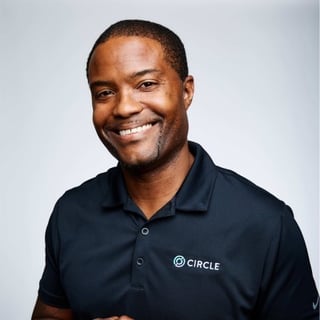
In this episode, Sam Sealey, Director of Community at Circle, sits down with Alex Szul, CEO and co-founder of Trad.Fi, a Circle Ventures portfolio company, to explore how private credit is moving onchain.
Alex shares his journey from technical sales to DeFi entrepreneurship, the origins of Trad.Fi, and why the private credit market—particularly asset-backed financing—is primed for modernization. The conversation breaks down how Trad.Fi uses blockchain technology to automate origination, underwriting, and servicing, bringing transparency, efficiency, and real-time visibility to a historically opaque asset class.
Sam and Alex also dive into why TradFi chose to build on Arc, the advantages of stablecoin-based settlement with USDC, and how onchain infrastructure can unlock new possibilities like standardized tokenization and future secondary liquidity for private credit. The discussion closes with insights into working with Circle Ventures and what’s next for TradFi as it scales deal flow and capital partnerships.
A must-watch for anyone interested in private credit, onchain capital markets, and how TradFi and DeFi are converging.
TRANSCRIPT
Sam: Hey, everybody. This is Sam Seeley, and we're here kicking off a new series where we get a chance to actually talk to some of the portfolio members of Circle Ventures, get a little behind the scenes, and understand their businesses. Today, we've got Alexander with TradFi. Really excited to dive right into this conversation with you.
Sam: If you can just open up a little bit about your background and tell us a little bit about TradFi.
Alexander: Sure. Well, thank you, Sam, for having me on here. It's very exciting to have a conversation with you and share it with the community. A bit about my background: my career began in consultative technical sales. I was a sales engineer for bulk material equipment, and I pivoted into finance back in 2020. Actually, into DeFi. I started a company called Roam Blockchain Labs.
Alexander: With them and a couple of team members, we launched a few projects. And that kind of grew into TradFi, where in 2024 I wrote the white paper for the underlying technology, began developing it, got the first product out in August of that year, and then about a year later, first brought it to our closed market.
Alexander: So TradFi in a nutshell is a private credit platform that integrates both Web3 and more traditional Web2 technology to automate the origination, underwriting, and servicing of asset-backed private credit positions. So in a nutshell, we're bringing private credit on-chain.
Sam: Very cool. Very cool. Very cool. Did you decide to kind of focus on this as a market?
Alexander: Good question. So initially, we weren't actually focusing on private credit, funnily enough. We built the technology for structured products, which are a type of financial derivative. And I was approached by a gentleman named Atticus Franken, who's one of the co-founders of TradFi. He actually came to me and said the equipment distribution and equipment financing space is completely misaligned. The fees and the rates and the length of time it takes to get orders executed is completely untenable with the type of technology that we have nowadays.
Alexander: So what if we build a platform that can expedite that process and include the transparency and the efficiency that you expect with blockchain technology? So I looked at the technology that we had been building up to that point, and lo and behold, it was a 90% fit. So we made a pivot and started building TradFi thereafter.
Alexander: What ended up happening actually is the three co-founders, Harley, Atticus, and myself, all happened to have backgrounds in equipment distribution. So it was quite a natural step to move into the asset financing space, especially considering my background in collateralized lending with on-chain money markets and Atticus' background in private equity.
Sam: Very neat, very neat. So let's kind of start to dive into the problem that you're trying to solve here. Let's talk about the market as a whole. So, the private credit market - how does it work today? Because I want to make sure I understand, and help the audience understand why blockchain, and then specifically, I know that you're coming to Arc - is the right solution for this?
Alexander: Great question. So if you'd like, I can give you kind of a condensed background about private credit, where it came from, and then kind of how this technology plugs into it.
Alexander: Private credit as a space has been around for decades, but it really started to expand right around the 2008 period post-GFC. The Basel III Accords came out that imposed some pretty tight restrictions on what traditional banks can do with their balance sheet. As a result, they tightened the reins on their credit outlays, but the structural nature of the demand for credit didn't really shift. It was an inorganic movement. So you had all this organic demand for credit in the global market, not just for asset-backed positions, but really anything mid-markets and such, that wasn't being met.
Alexander: So around that time, late 2008 or 2009, a lot of new private funds stepped in. These are investment funds, family offices, club investors that decided we can actually go ahead and take advantage of some of the opportunity that's being left on the table by the banks.
Alexander: One of the hallmarks of private credit as opposed to traditional banking financing is that the deals are much more bespoke, because you're working one-on-one with the capital provider. You have the ability to create a lending structure, a capital disbursement schedule, a covenant set that really meets the demands of the client.
Alexander: And that's useful, because as I'm sure you're well aware, especially in technology, the demands of companies aren't one size fits all. Every company has a unique set of circumstances they have to work within.
Alexander: So what you're finding is that you have a credit product that is unique. It is privately distributed, so it's not typically available for public investments. You typically have to be an institutional, accredited, or qualified investor. And the risk-return portfolio profile is also quite unique as well, where the rates are somewhat higher typically on private credit, and their performance is actually quite strong.
Alexander: One of the reasons for that is because private credit uses covenants - financial requirements in a contract, prohibitions or requirements. They actually cover and protect that with a lot more oversight than traditional loans have.
Alexander: So getting to the point of, okay, where does technology kind of fit into this process?
Alexander: There are segments of private credit that are more standardized than others. If you look at the whole market, the notional value of private credit - it's about three trillion dollars, as estimated by JPMorgan. I've seen other reports where, when you go into that market, about 50% of it is what's called direct lending.
Alexander: That's mid-market companies that need money for, you know, like a leveraged buyout, or they need expansion capital, typically with a private equity sponsor in that.
Alexander: And if you look at the smaller segments, one of those is asset-backed financing. And that's where TradFi sits. It's about 5% of the total market share. And it is giving capital to clients that have some type of tangible asset as collateral. So it's not a balance sheet, it's not stock, it's a generator, it's a solar panel, it's a whole data center, things like that.
Alexander: So in a lot of these deals, you'll find client types that have almost the same demands where they need money for 90 days. For example, let's say that, Sam, you're an equipment distributor, you're working with US Steel, right?
Alexander: US Steel says, I'm going to buy a conveyor off of you for a million dollars. You know, as the distributor, you can buy that conveyor for half a million dollars. But you look at your bank account, you don't have half a million dollars. So that's where TradFi comes in.
Alexander: We can give you the loan you need. You buy the asset. It's manufactured, fabricated by the OEM. And then 90 days later, when they receive it, they pay you, you pay us, everybody wins.
Alexander: So the real purpose here is to help fix the cash flow of particularly small businesses, while also accelerating their sales pipeline.
Sam: Nice, nice, nice, nice. So I mean definitely seems like there's some good opportunity in the market. So let's look into the blockchain aspect. You know, from the traditional route that people are obviously doing this today, why would they even consider moving over to blockchain? Like, what sort of advantages does it bring or maybe even complications?
Alexander: Sure. That's a very fair point. So to get kind of more into the specificity of the technical applications, there is a certain amount of automation that could be introduced for standardized loans. Anybody in the tech space is well aware of that. What blockchain adds to it is transparency.
Alexander: When you look at how private credit is traditionally dispersed, there's a lot of manual underwriting. And underwriting, for those who aren't familiar, is just the process of looking at all of the circumstances - the financial, the business, the market - that define the risk profile of a certain investment.
Alexander: So for small businesses, a lot of them use QuickBooks. A lot of them use Plaid or Plaid-connected banks. A lot of them have credit reports. All of these type of processes can be integrated into an automated workflow. That's what we do on the non-blockchain side.
Alexander: On the blockchain side, when we issue the credit, we actually tokenize that on-chain via an NFT. So what this does is it brings transparency to the portfolio.
Alexander: So when we work with our capital partners, they don't have to take our word that we're using the capital judiciously or that we're deploying it on the schedule that we say we're doing it. We're able to give them a 24/7, 365 fully independent oversight overview into how TradFi is performing.
Alexander: They can see every loan the second it goes out. They can see every loan the second it gets repaid. They can also see the loans if they happen to default.
Alexander: So this entire process is really open to our partners. That's a really unprecedented level of insight into a private credit fund's operation.
Alexander: But we find that this type of activity will become the standard in finance. There's of course anonymity, there's privacy - that's one thing that I know Arc specifically is building into the blockchain. But we find that we want to position ourselves ahead of the curve and make sure that we can meet the demands of capital partners and also our borrowers as they emerge.
Sam: So going back, I'm curious on the transparency aspects of it. And so, if I'm understanding correctly, you all are the broker that is kind of the connecting tissue. So, you have the institutional folks that have the capital that they want to invest, and then you have the businesses on the other side that need the credit. And you're in the middle facilitating all this. Right? I got that part. Right?
Alexander: In a sense, yeah. So technically, we're an asset manager. We take possession of the capital. We don't broker the deals, but the general idea is correct.
Sam: Yeah. Okay. So you guys get the capital upfront and you're managing and providing yield to your clients essentially through investing in these businesses or offering credit to these businesses. Right?
Alexander: Yep.
Sam: And so what you're explaining is right now the way it works in the market is in the traditional sense, these capital holders are giving it to an asset manager and they have zero idea of exactly if the money is even going where they say it's going. It kind of gives me like the Madoff scenario, right? It's like they just get a spreadsheet and they have to trust that the money is being invested correctly.
Alexander: Pretty much. They'll get quarterly reports, annual reports. I mean, oftentimes they are audited. But especially with the advancement of tech-enabled lending nowadays, there's a lot of benefits of having this type of workflow.
Sam: Yeah, no, it makes per- I'm catching up here. I only had one coffee, but now it makes more sense. It's scary to think that there is no transparency. And you hear of these stories of fraud all the time, right?
Sam: And it's always the most trusted folks. It's always the ones that are most trusted, giving great returns, have the best clients because they have this history. But yeah, you're right - outside of blockchain they're blindly just trusting you.
Sam: And I love you, Alex. You seem like a nice individual. We've got to talk a couple times. But I'm not sure that I want to trust without verifying when I hand over my hundred million dollars.
Alexander: Yep, exactly. And that's really it. There's a certain level of emotional comfort and reliability that comes in with blockchain technology in general. And as much as you like me, Sam, I don't want you to just take my word for it. That's why we're building the platform.
Alexander: So that way you can see all the transactions as they come through. And one of the nice things about using USDC, for example, is that we actually have instant settlement. We have the ability to intake USDC from the lender side. We also have the ability to distribute USDC on the borrower side.
Alexander: This entire workflow actually opens up an important opportunity for both TradFi and Arc, and private credit in general, which is a liquid secondary market. Liquidity and private credit almost never go together. They're a lot like oil and water.
Alexander: The fundamental reason is that a lot of the private credit deals are so bespoke and nuanced, it's difficult to create a liquid market where you can trade one-for-one. It doesn't really exist.
Alexander: With blockchain technology, however, we can at least take the first step by standardizing the tokenization of private credit. Some companies are using ERC-4626, which are the vault protocols. Some are using ERC-721s. I know some are using ERC-20s.
Alexander: And even though there are a couple different tokens being used right now, at least there's a standard - there's two or three of them that are realistically being used.
Alexander: And what we're going to find over time is that the composability inherent in decentralized finance will unequivocally have an impact on how private credit is shaped on-chain. And what that's going to do is permit a whole lot of trading of credit on the blockchain.
Alexander: And that's something that I know a lot of funds in the space, both Web3, fintech, and also traditional, are really trying to figure out right now.
Sam: Yeah. Interesting. Interesting. I know that you all have a kind of a front end that you can walk through and show. I wasn't sure if maybe you'll be willing to share that with the audience so they can get a sense for what the flow looks like, deal flow looks like.
Alexander: Yeah. Absolutely. So what I'll do here is I can show the audience the borrower-facing dashboard for TradFi. The lender-facing side, it's a pretty standard one. It's kind of simple. You connect your wallet, deposit USDC, or connect your bank and deposit fiat.
Alexander: The dashboard, however, was built with Web2 UX in mind. One of the issues I think that Web3 companies have oftentimes is that they build it for a Web3 audience, but most people are very familiar with how the internet currently works. So we've done that with TradFi.
Alexander: What you're seeing is the borrower dashboard for a standard client. This is of course all fictitious data. We couldn't show a real client's data, but it's very simple.
Alexander: It shows the number of loans, the monthly interest they're paying, how much is outstanding, their line of credit that's available, if there's any loans that are defaulted, and then also a couple test loans that have already been issued.
Alexander: So the process to mint the NFT, or to issue the loan, is done on just one page. It's done in a couple segments.
Alexander: The client comes to the website. They see how much of a line of credit they've been allocated. They upload the purchase order for the equipment or the asset. They input the information of the end client. So in this case, it'd be US Steel.
Alexander: They put in the installation address for the assets. They put in the specific line items. And then last, they define their own terms for the loan. They can have a bullet loan, which is you pay at maturity, or a monthly amortized loan, which is you pay every month.
Alexander: They put the amount up to the credit limit, the term that they need up to one year, and then they select how they want to be paid. Is it right to the bank account, or do they get USDC in their wallet?
Alexander: Once they click request financing, they are automatically presented with a preformatted loan agreement. It fills in all the information. They click sign. And the second they sign it, the NFT is minted, and the USDC is off to their wallet.
Alexander: And then it's that simple. They can get a loan in less time than it takes to make a cup of coffee. And I think that's quite revolutionary in the private credit space.
Alexander: There is a lot of technology that's sitting below user interface level. That goes into fraud detection, it goes into underwriting, it goes into capital management, there's a lot of accounting as well that's done. So it's a very complex piece of technology, but we wanted to distill it down into as easy-to-use a system as we can.
Sam: No, it makes sense. Looks really clean. Looks really clean. I want to pivot to Arc. I mentioned earlier that you made the decision to build on Arc. What were some of the factors that went into that decision?
Alexander: Good question. So the fundamental decision, or I think the most important one, it's been a personal question of mine for a long time: why don't blockchains have fixed prices on gas? That's been the biggest question.
Alexander: I've been involved in blockchain for years now. And when I look at the adoption question, taking a step back from TradFi specifically and looking at the space overall, I've always found it to be unwise to expect large players to buy a large portion of a volatile asset - a blockchain token, like a network token for gas.
Alexander: Because if you want to have large-scale, high-frequency adoption of a network, they're going to want to purchase it upfront and then deploy it automatically.
Alexander: Using USDC as gas on Arc is one of the simplest, but I think most impactful, changes in blockchain technology in a very long time.
Alexander: And then adding in the ability to bring in privacy, optional privacy, into the transactions is another really important factor for letting more traditional institutions become comfortable with working on a public but still anonymous network. So you retain privacy while also being anonymous.
Alexander: The last thing is really the philosophy behind it. I think you used the term - was it like the OS economy?
Sam: Oh, the economic OS. Yeah. Economic OS.
Alexander: Yes. Yes. That's a great word for it. Building that financial layer that allows disparate platforms to connect in a way that is 24/7, operable 24/7, fully compatible with instant settlement, and also third-party verification of some transactions as well. So auditable is exactly what the space needs.
Alexander: Having that type of flow in connection with the stellar reputation of Circle and USDC as an asset made it a no-brainer for us to deploy here.
Sam: Nice, nice. No, it's good to hear those words from a business and understand decisions. It's one thing for us from the inside building it, but it's always great to get that confirmation.
Sam: Something else I highlighted was you're a Circle Ventures portfolio company. I know internally working with Circle Ventures, they're very unique in an extremely positive way from other ventures out there. And I'm curious for you to maybe share some insights on your own experience and maybe some background on how you got connected.
Alexander: Sure. So my connection to Circle Ventures really began actually in Denver - was it this year, I think? I think it was this year in February.
Alexander: So Sam, you were leading an event with a couple existing Circle Ventures portfolio companies and some of their partners in the ecosystem. And I just so happened to show up. I registered for the event, and I was there for maybe two or three hours when I had to go to another meeting. But I'm like, okay, I know Conrad's there. He said he's using Circle Ventures. I'll go talk to him.
Alexander: Went up, spoke to him for maybe 30 seconds, gave him my number, and we just kept in contact from there. And then he brought David into the conversation.
Alexander: And we had a very clear, very level-set conversation about TradFi. I'm not sure how much the viewers have in terms of experience for raising in Web3, but there's often this expectation of, okay, how many tokens am I getting? At what price? What's your liquidity when you're launching? There's this kind of like, all right, what's my exit going to be?
Alexander: I didn't get that with Circle. When we had the conversation, I wasn't looked at as easy exit liquidity or as somebody to just kind of throw into a pile of other tokenized projects.
Alexander: David asked me, he said, so what's your plan with the token? I said, honestly, David, we don't have one. We're here to build technology and infrastructure that lasts, not a token that peaks and then crashes. Not saying tokens do that, but it's a real existential risk to a lot of projects. Oftentimes they don't even really need them.
Alexander: Working with Circle, working with Circle Ventures has been phenomenal because they've been able to understand the value proposition that we want to bring to the blockchain ecosystem, and they want to work hand in hand with us to do that.
Sam: Yeah. And you mentioned Conrad and Dave, I want to give them a public shout out as well. Once again, I tell people - I had this conversation last night actually - one of the things I really enjoy working here is that I do get to see how they are behind the scenes. I am in these conversations, whether it's in a meeting or maybe watching a game together after hours, and they are who they say they are. What they say publicly they believe in and what they want to do, that's how they are behind the scenes. It's something that was important to me.
Sam: I do want to give a shout out as well. Part of this series starting off was because of folks like Conrad wanting to make sure that you, the viewers, companies like yourself, have your own environment here on the Arc Community Hub of the friends of Circle Ventures to be able to connect, network, and grow, and also make sure that you get to support the rest of us.
Sam: Want to kind of move on here: what do you guys plan for the future? Had a great understanding now of where you are and the opportunity to see. You have people like Circle Ventures that are there to support you. What do you have your eyes set on next?
Alexander: Yeah. You know, at the time of recording, it's about a week before Christmas. We're going into the holiday season, and it's been a whirlwind of a year in a very positive way.
Alexander: We started the company and we started our seed round with really three goals in mind. And that was it: get the technology to production - production-ready technology - build out a robust pipeline of deal flow, and then lock in capital partners to begin supplying capital to that deal flow. We've thankfully been able to achieve everything that we wanted to right on time.
Alexander: Our technology has been deployed onto another chain right now for testing up until we go live on Arc. It's been audited by Halborn, that's ready to go.
Alexander: On the deal flow side, I have more deals than I know what to do with, which is kind of a good problem to have.
Sam: That's great.
Alexander: My inbox is flooded every other day with friends sending really good deal flow in a lot of cases. And we're starting to place them. We've had three projects go out the door already. We're placing our fourth and fifth right now, and they're only getting bigger. First one, we're five figures, six figures, seven figures, eight figures. So they're getting bigger as they go at a quite exponential pace.
Alexander: So going into 2026, our focus is the next raise. That's going to be one of our main priorities. We've achieved our goals. Now it's finding the partners that see the vision for private credit on-chain, understand the value add that we're bringing, and want to be a part of that success.
Alexander: And I'm so thankful to say that Circle has been a huge part of that thus far. I'm very much looking forward to working with you guys in the future.
Sam: Great. Great. Great. Great. Great. Well, look, I think we've covered quite a bit today. I want to thank you for joining and really sharing the market that exists, as well as diving into some of the reasons behind you working with Arc and even before that, really just using blockchain and helping to explain why it's even necessary. So definitely want to appreciate you there.
Sam: So for those that want to get in contact with you, what would be the best route for them to connect?
Alexander: Yeah. So there's really two ways of reaching out. You can go to [email protected], our company contact email. Happy to answer questions and get connected there.
Alexander: The other avenue is actually through the Arc community itself. I know you yourself, Conrad, Bobby Lee, the whole team really have been putting together quite an effort on growing it. So I believe that URL is community.arc.network. You'll find my account on there, and you can feel free to message me.
Alexander: I'll be posting as well throughout different opinion pieces and updates on the private credit space, be in some groups sharing our experiences, being part of the Circle Ventures portfolio, and happy to connect with anybody through there.
Sam: Awesome. Thank you. Thank you. Thank you. Really appreciate it. And just want to say, look, to everyone that was watching, thank you so much for tuning in. As you mentioned, I'll be out there in the community hub as well. So feel free to join. Drop a message. Let us know what you're building, what you need help with, and definitely you'll find someone that could help you.
Sam: So once again, appreciate it, Alex. It was great talking with you. And until next time, everybody. We'll see you soon.
Alexander: Thanks, Sam.
